


By Coast to Country Group Realty | The Carolina Girls

Coastal lifestyle illustration; not an actual property or mapped location.
You spot a home online. The porch looks inviting, there’s room for a golf cart, and the description says “east of Highway 17.”
Suddenly, you’re picturing morning beach walks and sandy flip-flops by the door.
But is living east of Highway 17 in Surfside Beach actually worth it?
It can be—if the location supports how you’ll live, and the ownership costs fit your budget. Before you narrow your entire home search to one side of the highway, here’s what to consider.
First, which Highway 17 are we talking about?
Around Surfside Beach, you’ll hear people mention Business 17 and Highway 17 Bypass. They are different roads, and that distinction matters when you’re comparing listings.
For this discussion, we mean east of Business 17, toward the ocean.
When browsing Surfside Beach SC real estate, check the actual address on a map. A description that sounds close to the beach doesn’t tell you the distance to a public access—or what the route feels like on foot.
The biggest benefit? The beach can become part of an ordinary day
There’s a difference between planning a beach day and deciding to walk down after dinner.
For someone who loves early walks, reading near the water, or spending an hour on the sand between errands, proximity can change how often they enjoy the coast.
Ask yourself:
- Would I use the beach several times a week?
- Do I enjoy walking, or would I usually drive?
- Would visiting friends and family use the nearby access?
- Is being close to the ocean more important than extra indoor space?
If the beach is central to your daily routine, location deserves real weight in your decision.
If you mostly want occasional beach visits, expanding your search may give you more choices.
“Close to the beach” needs a real-world test
A few blocks can feel different when you’re carrying chairs, an umbrella, towels, and a cooler.
Before buying a home near the beach in Surfside Beach, walk the actual route to the nearest public access. Look at intersections, walking surfaces, and the entrance itself.
The town provides beach accesses and beach-area parking, but parking availability and applicable fees still matter. Owning nearby doesn’t automatically mean every parking option is free or reserved for you.
Our suggestion: do your test walk with the people who will use that route. A comfortable stroll for one person may be less convenient for someone managing children, beach equipment, or mobility limitations.
A golf cart is convenient—but check the route first
The golf cart lifestyle is part of Surfside’s appeal. Still, a cart in the driveway doesn’t guarantee you can legally reach every restaurant, shop, or beach access you have in mind.
Before making golf cart access a requirement, verify the route, applicable rules, community restrictions, and parking arrangements.
And remember: getting to a beach access is different from driving onto the beach. The town prohibits golf carts and other unauthorized motor vehicles on the sand.
Love the house—and understand its upkeep
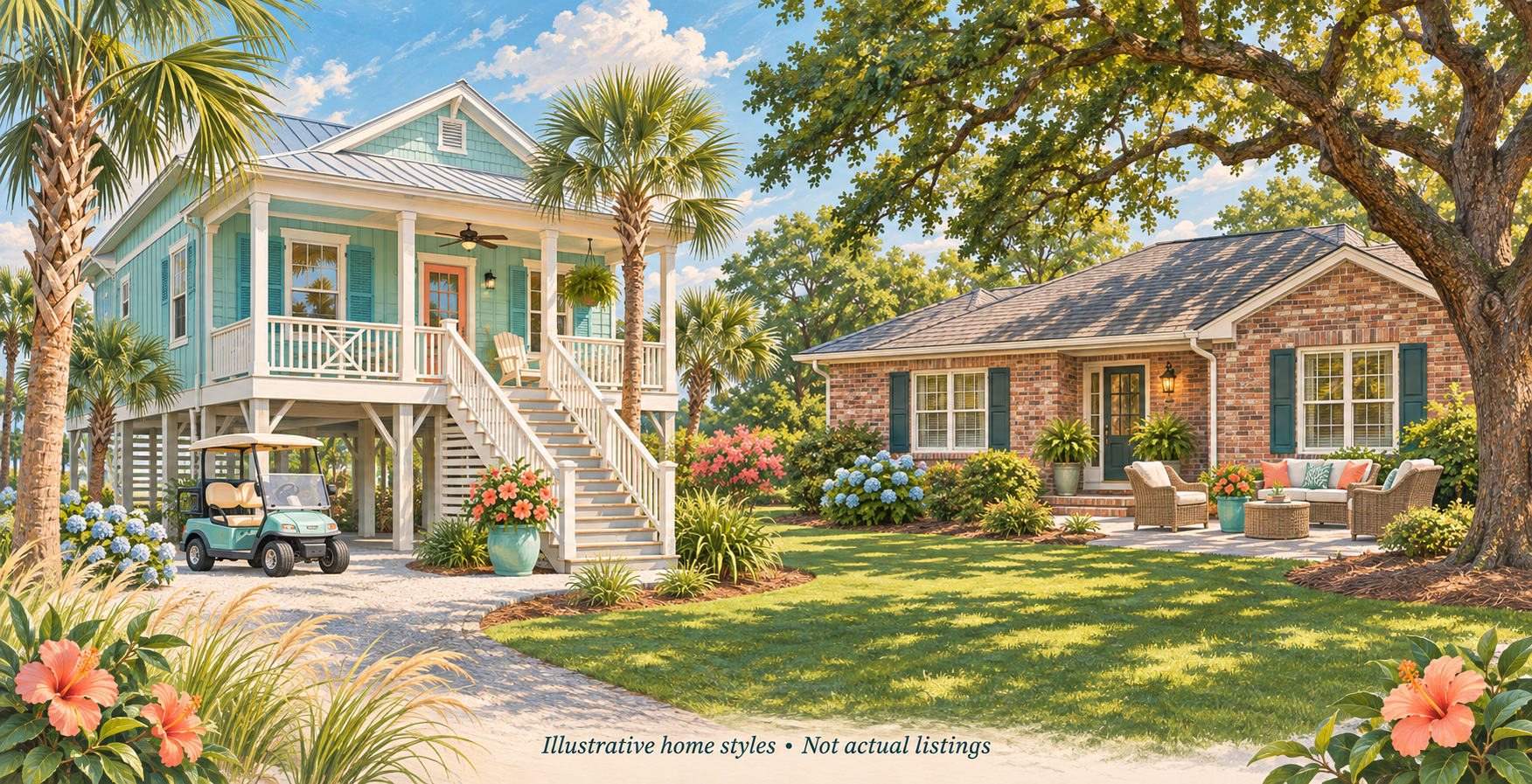
Illustrative home styles; not actual listings or a depiction of where each home type is located.
An elevated coastal house can offer a wonderful porch and useful space underneath. It can also mean carrying groceries upstairs, maintaining exterior steps, and planning for how you’ll use the home over time.
A traditional single-story home may better suit your routine, whether it sits east of Business 17 or elsewhere in the area.
During showings, look beyond the paint colors:
- How many steps separate parking from the kitchen?
- Where will beach equipment and a golf cart go?
- Does the outdoor space feel manageable?
- What condition are the roof, decking, railings, and HVAC equipment in?
Choose the layout you’ll appreciate on a rainy grocery day, too.
Compare the full cost—not just the asking price
Two similarly priced homes can have different ownership expenses.
Request property-specific quotes for homeowners, wind-and-hail, and flood coverage as appropriate. Standard homeowners insurance generally excludes flood damage, and coastal properties may require separate wind-and-hail coverage depending on the policy.
Don’t use “east of 17” or “west of 17” as a substitute for evaluating a property’s flood exposure, condition, and insurance needs.
Include taxes, association charges where applicable, utilities, and maintenance in your comparison.
Visit the street when people are actually using it
A home can feel different during a quiet weekday showing than on a summer weekend.
Pay attention to nearby vacation rentals, driveway arrangements, street parking, and activity around beach accesses. These factors vary by block.
Some buyers enjoy being close to the action. Others want a more tucked-away setting. Neither preference is wrong—but the right street matters.
So, is east of Business 17 right for you?
It may be if you’ll use the beach regularly, enjoy the nearby coastal routine, and feel comfortable with the particular home’s layout and expenses.
A broader search may serve you better if your priorities are fewer stairs, more yard, a different neighborhood setting, or additional space within your budget.
You don’t have to decide from listing photos alone.
At Coast to Country Group Realty, we’ll help you compare actual homes, routes, and ownership considerations.
Call or text “SURFSIDE” and tell us what matters most: beach distance, budget, single-story living, or golf cart access. We’ll help you narrow the search.
Robin: 843-222-9547
Tamara: 843-325-1492
Planning a move? Read our Surfside Beach relocation guide for more local considerations.
Helpful resources: Town parking information · Town beach access and rules · South Carolina homeowners insurance information · South Carolina coastal insurance resources. Verify current rules and property-specific coverage before purchasing.